
Communication during customs stop: How retailers should react
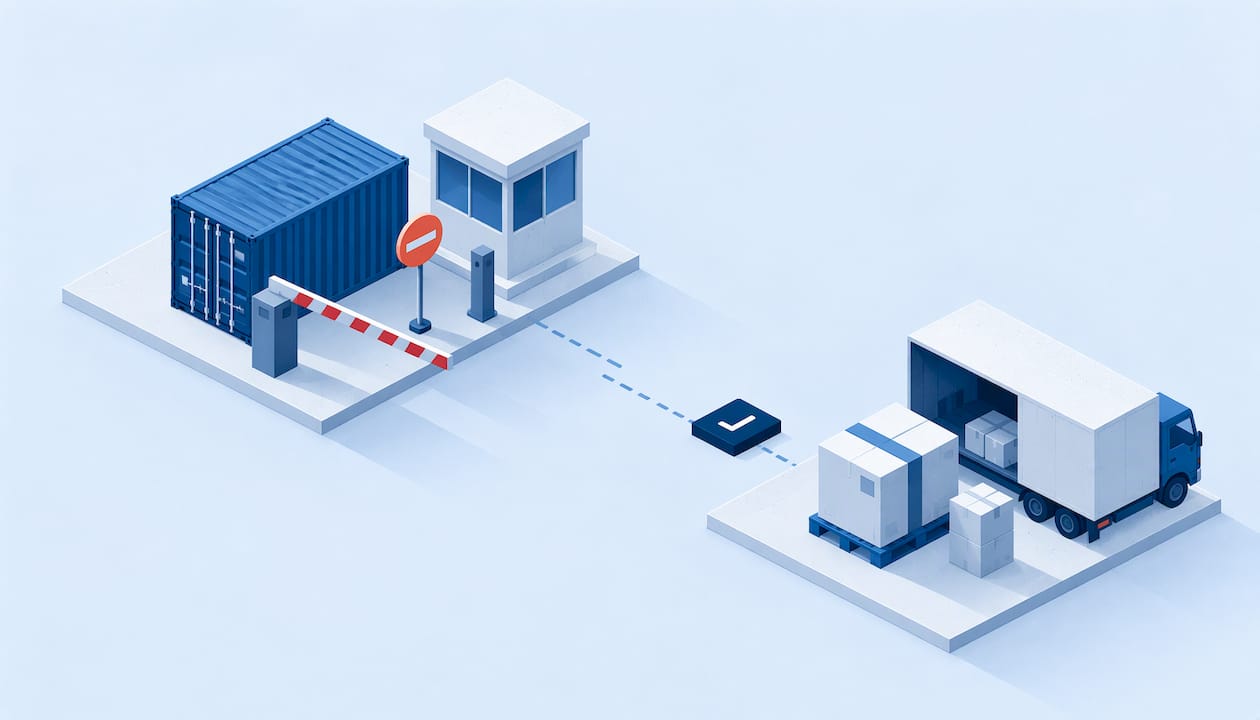
In the event of a customs stoppage, the first step is to determine the cause, then respond effectively. A designated contact person will handle the customs clearance and ascertain why the goods are being withheld. They will then provide precisely the required documentation and ensure that deadlines, customers, and shipping providers are all kept informed. Sending documents indiscriminately, contacting multiple agencies simultaneously, or missing a deadline will only prolong the delay. In the worst-case scenario, this could result in the destruction of the goods. This guide outlines who should communicate with whom during a customs stoppage, what information can expedite the release process, and how online retailers and B2B shippers can prevent such stops.
In a nutshell
- One office handles the communication: A designated contact person clarifies the exact reason with customs, the parcel service or the customs representative before anything is submitted.
- The cause determines the answer: Missing documents, unclear pricing, product safety and trademark law each require different documents and different contacts.
- Deadlines are short: In cases of suspected intellectual property infringement, there is a 3-day period after notification for perishable goods and a 10-day period for non-perishable goods.
- Document everything in writing: Document the times, inquiries, and responses. This will determine who bears the storage and demurrage costs later on.
- Prevention saves time: A fixed document check before shipping, well-maintained master data and automated customs data prevent most stops.
Table of Contents
- What a customs stop means and why it occurs
- Who speaks to whom: an overview of the roles
- The first steps after the stop message
- Which documents should be available for approval?
- Deadlines that determine the fate of the goods
- Communication with the end customer
- Duration, additional costs and proper documentation
- Fraud attempts involving alleged customs fees
- Preventing customs delays: what should happen before shipping
- Automated customs clearance with Paket International
- Frequently asked questions
- Sources
What a customs stop means and why it occurs
A customs stop means that customs authorities are holding a shipment or suspending further processing. The goods are neither lost nor confiscated, but they will only be forwarded once the outstanding issues have been resolved. In shipment tracking, this often appears as an indication of an "official stop." This is frequently due to... Officially ordered inspection, where it is checked whether the goods match the accompanying documents and do not violate any import ban.
The most common causes can be divided into five groups. According to the law firm O&W, these include: Violations of trademark law, missing or incorrect customs documents, violations of product safety regulations, import bans and restrictions, and ambiguities in tariff classification.
- Documents: Commercial invoice is missing, goods description is too vague, value or quantity differs between invoice and packing list.
- Tariff classification: The specified customs tariff does not match the described goods, or the description is insufficient for classification.
- Product safety: When importing goods into the EU, border authorities apply the following... Regulation (EU) 2019/1020 on the transfer from, if documents are missing, the labeling is incorrect, an incorrect CE marking is affixed, information on the economic operator in the EU is missing, or the product appears non-compliant or dangerous.
- Intellectual property: If there is suspicion of trademark or product piracy, customs authorities can Goods held at the border or suspend the processing.
- Prohibitions and restrictions: Certain goods may not be imported at all or only with permission.
This distinction is the key to effective communication during a customs stop. A stop due to an inaccurate product description can often be quickly resolved with a corrected invoice. However, a suspected trademark infringement is a legal matter with strict deadlines.
Who speaks to whom: an overview of the roles
When a shipment is held up, several parties are involved. Often, everyone contacts everyone else at once. This leads to conflicting information and wastes time. A clear model has proven effective: The exact reason for the delay is clarified through the contact person for customs clearance. The importer, freight forwarder or customs representative, and, if applicable, the supplier then jointly gather the necessary information on how to proceed. Logistics|Inside recommends.
| Participating body | role in the customs stop | Typical communication |
|---|---|---|
| Customs authority | Checks the shipment, requests documents, decides on the release | Written request or notification; response with the specifically requested evidence. |
| Parcel service or freight forwarder | Transports the goods, often acts as a customs representative | Status, file number, list of missing documents |
| Customs representative or customs service provider | Submits the customs declaration and represents the declarant | Collect all queries and submit corrected data. |
| sender or supplier | Knows the product, its value, origin, and composition | Provides invoices, data sheets, certificates, and proof of origin. |
| Recipient or importer | Is usually the declarant or customs debtor during importation? | Confirms information, pays taxes, grants powers of attorney |
| Specialist attorney | In cases of seizures due to intellectual property or serious allegations | Objection, access to files, negotiation with the rights holder |
One rule is important: A single department speaks externally. Internally, it gathers information from suppliers, warehouses, and sales. Externally, it provides a coordinated, complete response.
The first steps after the stop message
The first few hours often determine whether a shutdown lasts days or weeks. The following steps have proven effective in practice.
- Save report. Record the tracking number, file reference, date of receipt of the notification, and the exact wording. Deadlines may begin to run from this point.
- Check sender. Genuine inquiries come from the parcel service, the customs representative, or the customs administration itself. Payment requests via email with unknown links are a warning sign (more on this below).
- Ask for the specific cause. Don't ask "What's missing?", but rather: Which document, which information, in what format, and by when? For UPS shipments, Paketda advises following more than 3 days delay in contacting customer service and to clarify which documents, such as commercial invoices or proof of payment, are missing.
- Name the responsible person. Internally, designate a person to handle the case until it is released.
- Prepare documents in a targeted manner. Provide only the requested documents, but ensure they are complete and consistent. Logistics|Inside explicitly advises against this. to submit documents at randomInstead, the root cause should be systematically investigated.
- Send your reply in writing and have receipt confirmed. This creates a complete record.
- Inform customers. Inform the recipient factually about the delay and the next expected step.
- Follow up. Monitor agreed feedback deadlines and actively follow up if feedback is not received.
Which documents should be available for approval?
The documents required by the authorities depend on the reason for the stoppage. For most commercial shipments, it is advisable to have the following documents readily available at all times:
- Commercial Invoice including complete details of seller, buyer, value of goods, currency and delivery terms
- Packing List including the number of packages, weights and contents per package
- Customs tariff number for each item
- Precise product description: Material, intended use, composition instead of generic terms like "spare parts" or "gift"
- Proof of payment, when the declared value is questioned
- Importer details, such as EORI number and contact details
- Certificates of origin, if a preference has been requested
- Product-specific evidence such as declarations of conformity, CE documentation, safety data sheets or approvals
- License or proof of purchase for branded goods, to prove authenticity
Consistency is crucial. The product description, value, quantity, and importer must be identical on the invoice, packing list, label, and customs declaration. Even minor discrepancies, such as different quantities or a value in a different currency, will trigger inquiries.
Deadlines that determine the fate of the goods
A simple document stoppage delays delivery. However, proceedings concerning intellectual property or product safety are subject to fixed deadlines. If these deadlines are missed, the goods can be destroyed.
| Situation | Deadline | Source |
|---|---|---|
| Suspected infringement of intellectual property rights, perishable goods | 3 days after notification of the objection, not extendable | Federal portal |
| Suspected infringement of intellectual property rights, non-perishable goods | 10 days after notification of the objection | Federal portal |
| Decision regarding the destruction of the goods | Objection within one month of notification | Federal portal |
| Suspension due to product safety (EU) | 4 working days during which the market surveillance authority can request its continuation | Conphora |
The consequence for communication: The date on which the notification is received must be immediately entered into the calendars of all parties involved. Anyone who fails to react to a suspected trademark infringement may, under certain circumstances, tacitly consent to the destruction of the infringing materials. The O&W law firm points out that such stops serious legal allegations such as trademark piracy This may include [unclear text]. Therefore, in complex seizure cases, a lawyer specializing in customs and trademark law should be consulted before any substantive statement is made.
Communication with the end customer
For online retailers, a customs stoppage is primarily a customer service issue. The recipient sees a standstill in the shipment tracking and contacts the shop. Clear, early notification prevents inquiries, cancellations, and negative reviews.
A good customer message contains:
- The current status: The shipment is currently undergoing customs inspection.
- The cause, as far as known and reasonably communicated: for example, a question about the product description.
- What has already been done: Documents have been submitted, and the customs representative has been informed.
- What the customer needs to do: Often nothing. If there is, for example a power of attorney or the payment of import duties, describe exactly how and through which official channel.
- The next information session: For example, an update within two working days.
Merchants should avoid making predictions they cannot keep, such as firm delivery dates. Likewise, blaming customs or the parcel service should not be included in the message. The same applies to B2B transactions, with the added consideration of whether the recipient, as the importer, is required to provide documentation.
Duration, additional costs and proper documentation
It's impossible to say definitively how long a customs stop will last. A missing document is often resolved after a response. However, according to O&W, the process can be longer if the seizure is due to trademark infringement. over several monthsIf an objection is raised and the rights holder files a lawsuit, storage costs and other expenses may be incurred during this period.
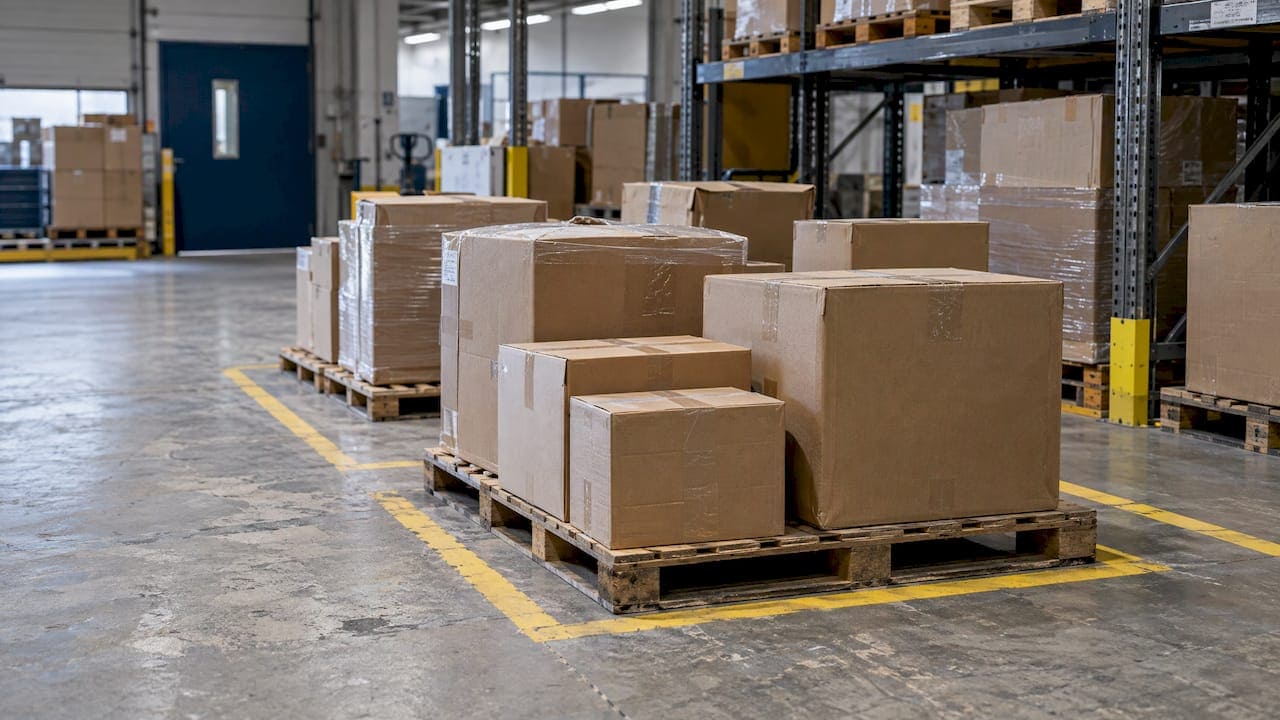
For container shipments, demurrage charges are added. The law firm R&U emphasizes that who bears the costs depends on who is responsible for the incorrect registration. The cause and timeline should therefore be precisely documented.Typically, the shipper, freight forwarder, and shipping company are the parties involved.
In practical terms, this means that every message, every call, and every document submitted should be recorded with the date and time. A simple case log is sufficient.
- Date and time of the stop message
- Content of the request and requesting body
- Date of response and list of submitted documents
- Confirmations and file numbers
- Date of release or further decision
This protocol will later serve two purposes: clarifying cost issues and analyzing the causes to prevent the same error from recurring.
Fraud attempts involving alleged customs fees
Customs stops are also being used for fraud. Customs officials have repeatedly warned of this. Emails allegedly from customs Warnings have been issued demanding payment of customs duties and taxes. Therefore, some basic rules apply to communication during a customs stop:
- Only check payment requests via known channels: the commissioned parcel service, the customs representative or the service provider's customer account.
- Do not make any payments via links in unexpected emails or text messages.
- Compare the tracking number and file number with your own shipping data.
- Inform customers in the shop about the methods by which legitimate tax demands are made.
Preventing customs delays: what should happen before shipping
The best communication during a customs stop is the kind that isn't needed at all. Most stops are due to data that could have been correct before shipment. Logistics|Inside recommends... fixed document check before dispatch, well-maintained master data for regularly shipped products and clearly defined responsibilities for tariff classification, origin and customs value.
In practice, this means:
- Master data per item: Enter customs tariff number, country of origin, material, weight and precise description once and automatically apply it to every shipment.
- Care during product changes: New material, new function, or new supplier can mean a different classification.
- Standardized documents: Generate invoice, packing list and label from a single data source to avoid discrepancies.
- Clarify product conformity in advance: Check CE marking, labeling requirements and economic operators in the EU before the first shipment.
- Establish an emergency plan: Who is responsible internally, which customs representative is involved, who informs the customer?
- Archive documents: Store all shipping documents centrally so that they are available in minutes instead of hours if there are any queries.
Automated customs clearance with Paket International
Paket International connects online shop and ERP systems, parcel services such as DHL, UPS, FedEx, DPD and DB Schenker, as well as customs services on a single platform. Shipping costs and customs fees are calculated in seconds. automatic customs clearance It handles customs clearance without manual intervention. Shipping documents are generated and managed centrally.
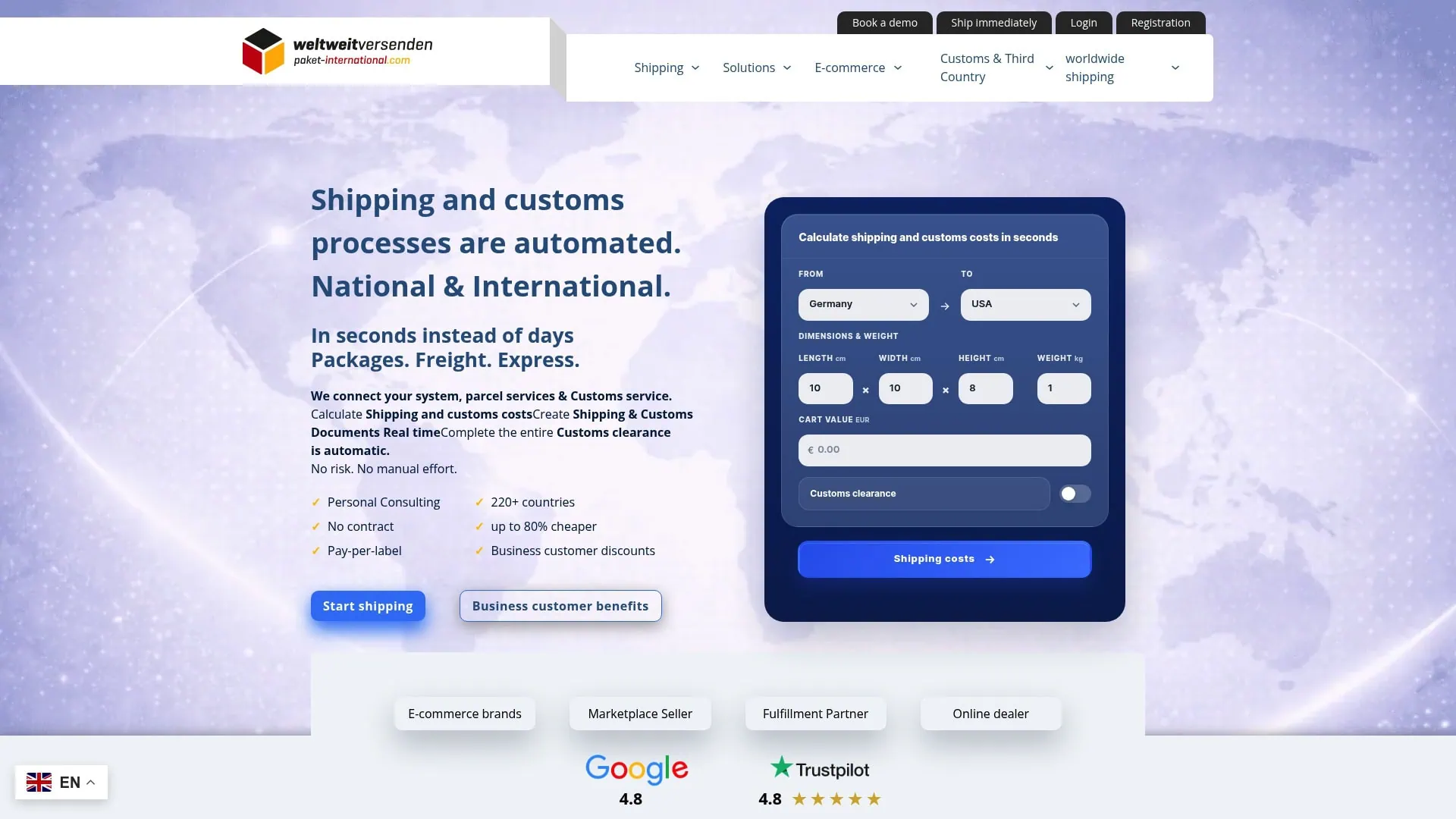
Three functions are particularly relevant for communication during a customs stop:
- Proactive customer and customs communication: Inquiries are actively received and processed, instead of senders having to track them down themselves with multiple departments.
- Central dashboard with real-time shipment tracking: All shipments, status updates, and documents can be viewed in one place.
- Shipping document management: Commercial invoices and accompanying documents are generated from the same data as the shipping label. This reduces precisely the discrepancies that frequently lead to inquiries.
According to the company, the platform reduces costs by up to 80%. Billing is per shipping label. Business customers receive discounts, and the platform offers Silver, Gold, and Platinum plans. Premium and Platinum plans guarantee calculated landed costs. The platform connects via... Shipping API and shop pluginsAn overview of all functions is provided by the Shipping platform.
Frequently asked questions
Who needs to report to customs when stopped at a customs checkpoint?
Generally, the entity that submitted the customs declaration communicates with the customs authority. This is usually the parcel service, freight forwarder, or an appointed customs representative. The sender and recipient provide them with the requested information. In cases involving intellectual property, the notification is sent directly to the declarant or owner of the goods.
How long does a customs stop last?
It depends on the reason. If only one document is missing, the shipment is often quickly dispatched again after a complete response. However, in cases of seizure due to trademark infringement, the process can drag on for several months if the rights holder files a lawsuit.
What deadline applies after notification of goods being held?
In cases of suspected intellectual property infringement, the objection period is 3 days for perishable goods and 10 days for non-perishable goods. An objection to a destruction order can be lodged within one month of notification. The date of receipt of the notification should therefore be noted immediately.
Who bears the costs if a shipment gets stuck in customs?
Storage costs and demurrage are generally borne by the party responsible for the cause, such as an incorrect registration. The exact allocation depends on the contract and the specific circumstances. Complete documentation of the cause and timeline is essential for any subsequent clarification.
How can customs stops be permanently avoided?
With well-maintained product master data, a standardized document check before shipping, and documents all originating from a single data source, automated shipping platforms retrieve tariff data, invoices, and labels directly from the shop or ERP system. This reduces manual errors.
Sources
- Federal portal: Information on goods held up at the border
- O&W Law Firm: Seizure by customs – What to do?
- Conphora: Customs stopped our shipment at the EU border.
- Logistics|Inside: Delivery bottleneck at customs
- R&U: Container held up in customs – who pays the demurrage?
- Paketda: Package delayed due to an official stoppage
- Paketda: Customs fees for UPS packages
- Homburg1: Customs warns of fraud schemes